
 ®
Training Longevity: How to Still Be Strong at 50
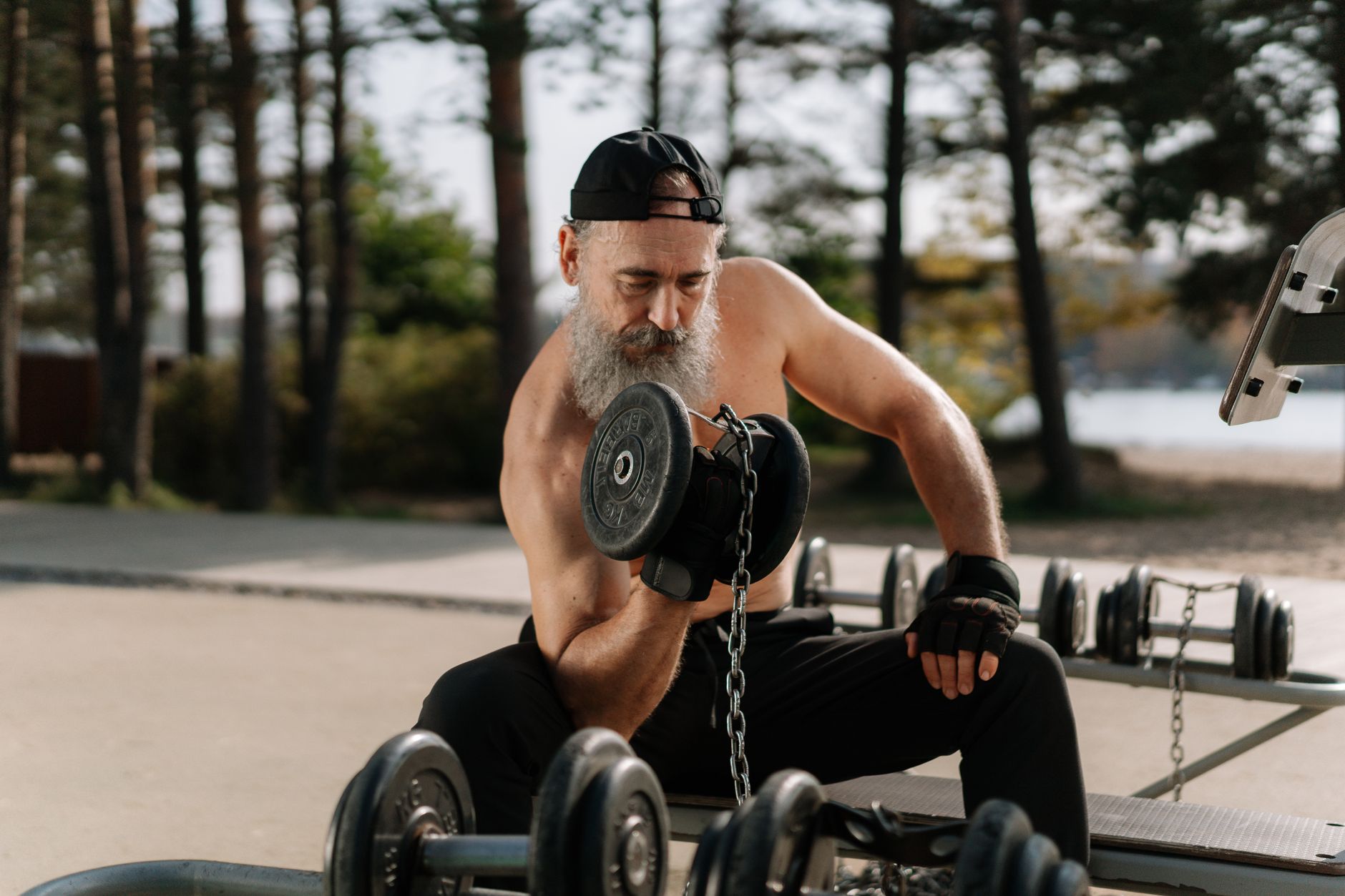
Training longevity is the ability to maintain a high level of strength, muscle mass, and physical resilience across decades by prioritizing recovery and intelligent adaptation over short-term intensity. To still be strong at 50, you must shift from a mindset of absolute exertion to one of systemic management, ensuring that your training stimulus never exceeds your capacity to recover. This transition requires moving away from static, rigid templates and toward a flexible, feedback-driven approach that respects your biological age and life stressors.
For a serious lifter in their 30s or 40s, the goal is no longer just hitting a personal record today, but ensuring you are capable of hitting one ten years from now. Many lifters fail to make this transition, attempting to follow the same high-volume, high-frequency programs they used in their early 20s. This path almost always leads to chronic joint pain, systemic fatigue, and eventual stagnation. Sustainable training is not about doing less work: it is about doing the right amount of work at the right time.
Key Takeaways
- Manage Total Stress: Understand that your body does not distinguish between training stress and life stress, necessitating a program that adapts to your actual recovery capacity.
- Prioritize Movement Quality: Shift your focus from moving the most weight possible to moving weight with perfect technical proficiency to preserve joint integrity.
- Regulate Intensity: Use tools like RPE (Rate of Perceived Exertion) to ensure you are leaving enough in the tank to recover for the next session.
- Integrate All Variables: Recognize that training, nutrition, and sleep are not separate silos but a single system that dictates your performance.
- Earn Your Volume: Increase training load only when your performance and recovery metrics indicate you have adapted to the current stimulus.
The Shift from Maximum Intensity to Optimal Stimulus
In your 20s, you can often train through poor sleep, high stress, and suboptimal nutrition while still making progress. This is the era of brute force. However, as you move into the category of lifting after 40, your margin for error narrows. The central nervous system and connective tissues take longer to recover from maximal efforts, meaning the "no pain, no gain" philosophy becomes a recipe for injury rather than growth.
Training longevity depends on your ability to stimulate the muscle without crushing the system. This requires a move toward submaximal training. Instead of taking every set to failure, serious lifters who stay strong into their 50s typically work within a range of one to three reps shy of failure. This approach provides 90 to 95 percent of the hypertrophic stimulus while significantly reducing the recovery demand on the joints and nervous system.
Consider the difference between a lifter who grinds out a maximum effort squat every week and one who stays at 80 percent intensity with perfect form. The first lifter may see faster gains for six weeks before a hip or lower back issue forces them to take a month off. The second lifter trains consistently for years without interruption. Over a decade, the second lifter will be significantly stronger and more resilient because they never had to stop.
How to adjust your intensity for longevity
- Use a 2-rep reserve: For most compound movements, aim to finish each set feeling as though you could have completed two more clean repetitions.
- Monitor bar speed: When the speed of the weight noticeably slows down, the set is likely finished, regardless of the target rep count.
- Focus on tempo: Controlling the eccentric (lowering) phase of a lift reduces shearing forces on the joints and increases time under tension without needing excessive weight.
Why Sustainable Training Requires Feedback Loops
Generic programs are built on the assumption that every day is a good day. They prescribe specific weights and volumes weeks in advance, ignoring the reality of your life. If you had a four-hour night of sleep or a high-stress day at the office, a static program will still tell you to hit a new personal best. Following that advice is a direct threat to your training longevity.
A truly sustainable training philosophy uses feedback loops to adjust the work based on your current state. If your grip strength is down, your resting heart rate is up, or your motivation has cratered, these are signals that your recovery is lagging. A smart system responds by scaling back volume or intensity for that session, preserving your ability to train hard later in the week. This is the difference between an athlete who trains for a lifetime and one who burns out by 45.
Find the training bottleneck your current program is missing.
Take the 3-minute Plateau Breaker Scorecard and see whether programming, progression, recovery, or another constraint is actually holding you back. Take the Scorecard →
Is Lifting After 40 Different?
Biologically, the primary difference for lifters over 40 is the rate of protein synthesis and the resilience of soft tissue. While you can still build significant strength, the "cost" of each session is higher. You can no longer separate your time in the gym from your time in the kitchen or the bedroom. To maintain performance, you must view your training, nutrition, and recovery as one plan.
One of the most common mistakes is trying to "out-train" a lifestyle that does not support recovery. As we age, the hormonal environment changes, and our ability to handle high-frequency, high-volume sessions diminishes. A lifter at 45 might find they make better progress on three high-quality sessions per week than they did on five mediocre ones. This isn't "getting old," it is getting efficient. You are focusing your limited recovery resources on the movements that provide the highest return on investment.
Recommended Training Constraints for Longevity
- Frequency: 3 to 4 days per week is usually the sweet spot for serious lifters over 35 to allow for 48 to 72 hours of recovery between major sessions.
- Exercise Selection: Swap high-risk movements for safer alternatives if your anatomy demands it. A trap bar deadlift or a weighted dip may provide the same stimulus as a straight bar deadlift or a bench press with far less joint strain.
- Recovery Anchors: Ensure you are hitting 7 to 8 hours of sleep and consuming at least 0.8 to 1 gram of protein per pound of body weight to support tissue repair.
The Role of Progressive Overload in Long-Term Strength
Progressive overload is the law of the gym, but for the aging lifter, it must be applied with nuance. In a program for new lifters, progress is linear and rapid. For the experienced trainee looking toward their 50s, progress is often nonlinear. You might add a rep one week, improve your form the next, and only add weight every third or fourth week.
Longevity is earned through "micro-progressions." If you add just 2.5 pounds to a lift every month, that is 30 pounds in a year and 300 pounds in a decade. Most lifters fail because they try to add 10 pounds every week, hit a wall, get injured, and end up back where they started. The goal is to stay in the game long enough for the compounding effect of consistent, submaximal training to take hold. Strength at 50 is not about what you did this morning: it is the result of the thousands of sessions you didn't miss because you were too hurt to train.
Frequently Asked Questions
How often should I change my workout routine for longevity?
You should not change your routine based on a calendar, but rather based on performance plateaus or boredom. Keeping the same core movements for months or years allows you to master the mechanics and track real strength progress, provided you are making small adjustments to volume and intensity as needed.
Can I still build muscle after age 45?
Yes, muscle protein synthesis still occurs effectively in older adults, though it may require a higher focus on protein quality and timing. By prioritizing compound movements and ensuring adequate recovery between sessions, lifters in their 40s and 50s can continue to add lean mass and improve body composition.
Should I stop doing heavy squats and deadlifts as I age?
There is no reason to stop these movements unless they cause pain that cannot be resolved through technical adjustments. However, many lifters find that modifying the range of motion or using variations like the box squat or rack pull allows them to maintain high levels of lower-body strength while protecting their joints for the long term.
Ready to stop guessing?
Take the 3-minute scorecard built for serious lifters 28 to 45. Get a clear read on your real bottleneck and what to do about it.
Optimal Athlete
Training and nutrition articles from Optimal Athlete.