
 ®
Heart Rate Variability: A Window Into Your Recovery
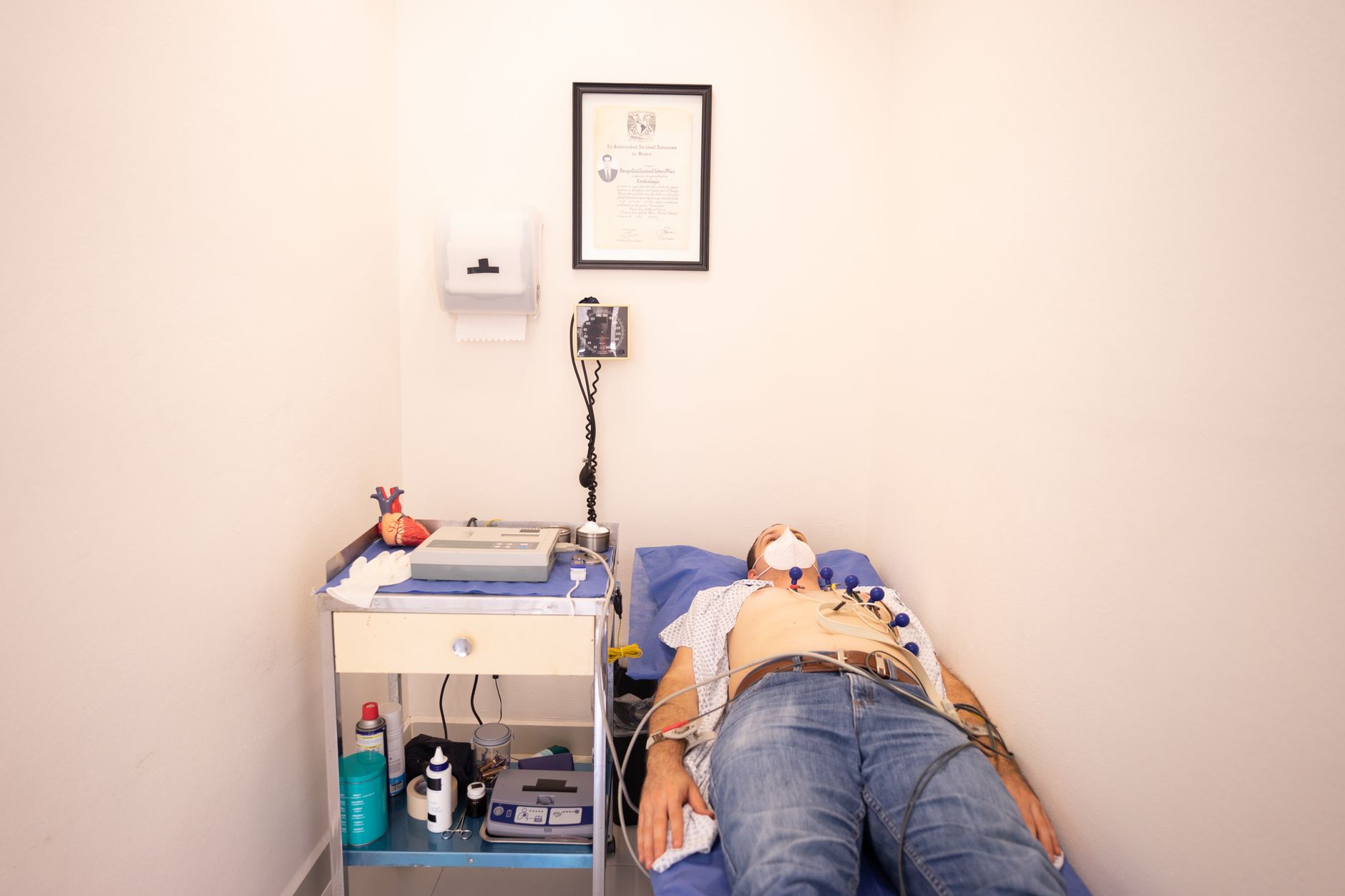
Heart rate variability (HRV) is the most objective metric available for measuring your autonomic nervous system's response to training stress and daily life. By tracking the millisecond variations between consecutive heartbeats, you gain a clear picture of your readiness to perform and whether your current workload exceeds your ability to recover. Using HRV training data allows you to move beyond the limitations of static templates by adjusting your intensity based on real-time physiological feedback.
For the serious lifter, progress often stalls not due to a lack of effort, but because the central nervous system is overtaxed. When you are balancing a high-stress career with heavy compound movements, your body does not distinguish between a difficult meeting and a set of heavy squats. Both pull from the same finite pool of adaptive energy. Monitoring your heart rate variability provides a window into this pool, ensuring you push when your body is receptive and pull back when you are on the verge of burnout.
Key Takeaways
- Measure autonomic balance: HRV reflects the tug-of-war between your sympathetic (fight-or-flight) and parasympathetic (rest-and-digest) nervous systems.
- Identify hidden fatigue: High HRV generally signals a recovered state, while a significant drop often precedes physical illness or overtraining symptoms.
- Individualize your baseline: HRV is highly personal. Comparing your numbers to others is useless; you must track your own rolling average over time to identify meaningful trends.
- Adjust intensity dynamically: Use your readiness score to determine if today is a day for a new personal record or a day for restorative movement.
- Integrated recovery: HRV should be viewed alongside sleep quality, nutrition, and training volume to build a sustainable, long-term performance system.
What is Heart Rate Variability and Why Does It Matter?
Most lifters assume a healthy heart beats like a metronome, perfectly rhythmic and predictable. In reality, a healthy heart is irregular. If your pulse is 60 beats per minute, the time between those beats is not exactly one second. One interval might be 0.95 seconds, while the next is 1.08 seconds. This variation is governed by the autonomic nervous system. When your parasympathetic system is dominant, your heart rate slows and variability increases. When you are under stress, your sympathetic system takes over, your heart rate rises, and the intervals between beats become more rigid and consistent.
This biological signal is crucial for recovery monitoring. A high HRV indicates that your body is resilient, adaptable, and ready to handle the mechanical and neurological stress of a heavy session. Conversely, a low HRV suggests that your system is stuck in a sympathetic state, struggling to process the cumulative load of training, work, and poor sleep. For the athlete in their 30s or 40s, this distinction is the difference between a productive training block and a nagging injury that sets you back three months.
Static programs fail because they assume your recovery capacity is identical every Tuesday. They do not account for the fact that stress is sabotaging your training in ways that aren't always obvious. By paying attention to these millisecond fluctuations, you transition from following a generic plan to executing a reactive strategy that respects your biology.
How to Use HRV for Recovery Monitoring
To make HRV a functional tool in your arsenal, you must establish a baseline. Your absolute number matters far less than how that number shifts relative to your seven-day and twenty-one-day averages. A "good" HRV for a 35-year-old lifter might be 50ms, while another might naturally sit at 80ms. The goal is to identify your normal range and look for deviations.
Successful recovery monitoring follows a simple hierarchy of decision-making based on your daily readings:
- Within Normal Range: Proceed with your scheduled training. Your body is successfully adapting to the current volume and intensity.
- Significant Trend Upward: This often indicates a period of supercompensation. If you feel strong, this is an ideal time to push for a top set or increase volume slightly.
- Moderate Drop (10-20% below baseline): Your system is under strain. Consider reducing your working sets or capping your RPE (Rate of Perceived Exertion) to 7 or 8. You might also look at recovery science protocols to help facilitate a return to baseline.
- Acute Drop (Over 20% below baseline): This is a red flag. It typically signals an impending illness, extreme lack of sleep, or systemic overreaching. An active recovery day or a complete rest day is usually the most productive choice here.
Consistency is the only way this data remains valid. You should measure your HRV at the same time every day, ideally immediately upon waking. External factors like caffeine, evening alcohol consumption, and even the act of standing up can skew the reading. By standardizing the environment, you ensure the data reflects your internal state rather than a momentary environmental trigger.
Find out whether recovery is the real limiter.
Take the 3-minute Plateau Breaker Scorecard and see whether sleep, recovery, training structure, nutrition, or accumulated stress is slowing progress. Take the Scorecard →
Integrating Readiness into Your Training System
The primary critique of HRV training is that it can lead to "laziness" or looking for excuses to skip the gym. However, for the serious lifter, the opposite is usually true. Most high-achieving professionals tend to overtrain, ignoring signs of fatigue until they hit a wall. Using a readiness score provides the objective permission required to take a light day, which ultimately leads to better long-term gains.
True readiness is an intersection of several data points. While HRV tells you about your nervous system, you must also consider your subjective feel, your recent sleep metrics, and your nutritional consistency. If your HRV is high but you have a localized joint injury, you still shouldn't load up a heavy triple. If your HRV is low but you feel mentally sharp and have been tapering for a week, you might choose to push through. The data informs the decision, but it does not replace the lifter's intuition.
This integrated approach is where most generic fitness apps fail. They treat training in a vacuum, ignoring the lifestyle factors that dictate your ceiling for progress. A smarter system looks at your biomarkers and asks: "What is the best next decision for this individual under these specific constraints?" This prevents the common cycle of three weeks of progress followed by two weeks of burnout and regressive strength.
How Much Does HRV Impact Your Readiness?
To understand the scale of impact, consider the following scenarios commonly seen in lifters who monitor their physiology. These numbers represent typical shifts in HRV and the corresponding recommended actions for a 185lb male lifter with a baseline HRV of 70ms.
- The "Green Light" (70-75ms): Readiness is 95-100%. Recommended: 100% of planned volume. This is the day for 4 sets of 5 at 85% of your max.
- The "Yellow Light" (55-60ms): Readiness is 70%. Recommended: 60-70% of planned volume. Reduce 4 sets to 2 sets, or keep the sets but drop the load by 10%. Focus on technique and movement quality.
- The "Red Light" (Under 50ms): Readiness is 40%. Recommended: Active recovery. 20 minutes of light walking or mobility work. Prioritize an extra hour of sleep and increased hydration.
By respecting these thresholds, you ensure that every heavy set you perform is actually stimulative rather than just additive fatigue. You are no longer just "doing work"; you are managing an adaptive process. This shift in mindset is what separates the intermediate lifter from the advanced trainee who continues to see results well into their 40s.
Frequently Asked Questions
Can I improve my HRV through specific training?
Yes, though it is indirect. Improving your aerobic base through Zone 2 cardiovascular work typically increases your resting HRV over time by strengthening your parasympathetic tone. Additionally, improving sleep hygiene and managing chronic life stress are the most effective ways to raise your baseline variability.
Should I skip my workout if my HRV is low?
Not necessarily, but you should modify it. A single low reading might just mean you had a poor night's sleep or a late meal. However, if your HRV stays low for two or three consecutive days, a deload or a rest day is mandatory to prevent a total crash in performance.
Is a higher HRV always better for lifters?
Generally, a higher HRV relative to your baseline is positive, but an abnormally high spike can sometimes indicate that the body is overreaching and trying to recover from extreme stress. Context matters most; look for stability and a slow upward trend during a successful training block.
Ready to stop guessing?
Take the 3-minute scorecard built for serious lifters 28 to 45. Get a clear read on your real bottleneck and what to do about it.
Optimal Athlete
Training and nutrition articles from Optimal Athlete.