
 ®
Why You're Not Gaining Muscle Anymore — And How to Fix It
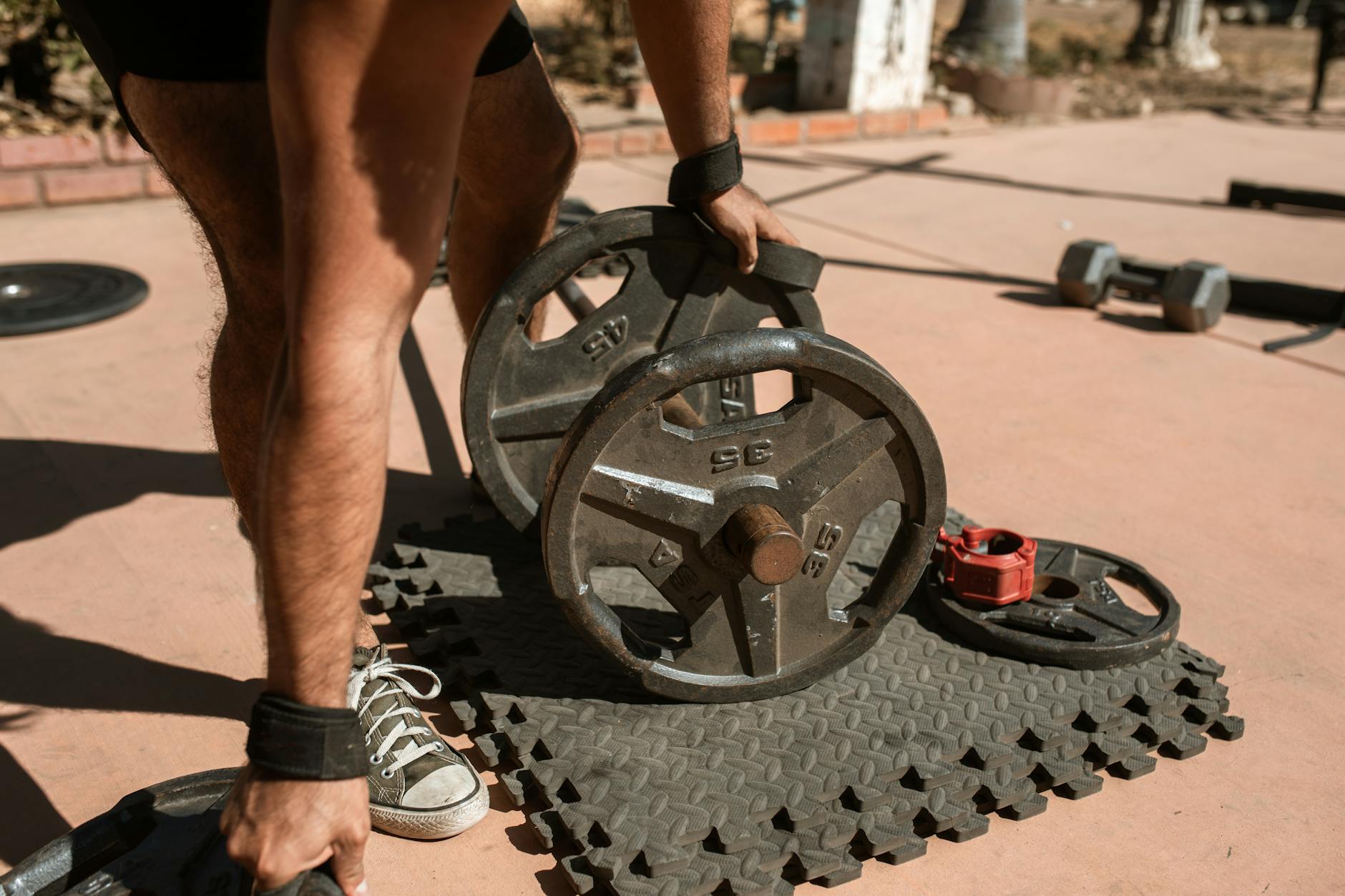
The transition from novice gains to intermediate mastery is often marked by a frustrating realization. The strategies that added ten pounds of lean tissue to your frame last year have suddenly lost their efficacy. For the serious lifter between the ages of 28 and 45, a muscle gain plateau is rarely the result of a lack of effort. More often, it is the result of a physiological system that has successfully adapted to a static stimulus. When your training environment becomes predictable, your body no longer perceives a biological need to synthesize new contractile tissue.
A hypertrophy stall is not a permanent state, but rather a feedback signal. It indicates that the gap between your current recovery capacity and your training stress has closed. To restart structured progression, you must move beyond the basic application of intensity and toward a more sophisticated, adaptive approach. This requires an honest assessment of how your body responds to specific stressors in real time, rather than following a rigid template designed for a generic demographic.
The Physiology of a Hypertrophy Stall
Most lifters encounter a plateau because they treat progressive overload as a linear path. They assume that adding five pounds to the bar every week is a sustainable model for a decade of lifting. However, the body operates on the principle of homeostasis. As you become more trained, the "cost" of adaptation increases. The same volume that once triggered growth now barely suffices for maintenance. This phenomenon is known as the law of diminishing returns in strength training.
When you reach this stage, the traditional solution of "working harder" often backfires. For the professional with a demanding career and family commitments, systemic stress is high. If you attempt to force progression by simply adding more sets or intensity without considering your systemic recovery, you risk overreaching. At this point, your muscle gain plateau is likely driven by chronic inflammation and a hormonal profile that favors catabolism over growth. You are not under-training; you are under-recovering relative to the demands of your program.
The Role of Stimulus Decay
Muscle tissue is metabolically expensive to maintain. Your body will only build more of it if it is forced to adapt to a novel stressor that it cannot currently manage. If you have been performing the same movements, in the same rep ranges, with the same rest intervals for six months, you have reached stimulus decay. Your central nervous system has become so efficient at these specific patterns that the metabolic cost of the session has dropped. Without a strategic shift in exercise selection or loading schemes, your hypertrophy progress will remain stagnant.
The Fallacy of Static Programming
The primary reason most serious lifters fail to break through a plateau is their reliance on static templates. A generic program cannot account for the fluctuations in your daily life. It doesn't know if you slept four hours last night, if you are fasted, or if you are managing a minor joint irritation. When you follow a fixed plan regardless of these variables, you are either under-training on days when you are capable of more, or over-training on days when your systemic resources are low.
True structured progression requires a feedback loop. This involves monitoring biomarkers and performance data to adjust the training load dynamically. For example, if your grip strength or heart rate variability indicates high systemic fatigue, pushing for a personal record in the squat is counterproductive. Conversely, when your recovery is peaking, a generic program might hold you back from the very intensity needed to trigger new growth. An adaptive system bridges this gap by aligning the training stimulus with your current physiological state.
Closing the Nutrition and Training Gap
Many lifters treat nutrition, training, and recovery as three separate silos. In reality, they are deeply interconnected. A hypertrophy stall is often a sign that these three elements are out of alignment. You may be training with enough intensity to trigger growth, but your nutritional protocol is too rigid to support the resulting repair process. Or, perhaps your supplement regimen is optimized, but your training lacks the specific mechanical tension required to utilize those nutrients effectively. Synergistic coaching views these elements as a single, integrated performance system.
Find the real reason your body stopped responding.
Take the 3-minute Plateau Breaker Scorecard and get a personalized read on what is actually holding you back. Take the scorecard →
Strategic Variables for Breaking the Plateau
To overcome a muscle gain plateau, you must manipulate variables beyond just the weight on the bar. While progressive overload is the foundation, it can be expressed through increased volume, improved technical execution, or shortened rest intervals. For the advanced trainee, the focus should shift toward increasing the density of the workout. This means performing the same amount of work in less time, or performing more work in the same amount of time, without compromising form.
Another critical adjustment is the introduction of planned variation. This does not mean "muscle confusion" or random exercise selection. Instead, it means rotating exercise variations that target the same muscle groups but through different planes of motion or resistance curves. This keeps the stimulus fresh while allowing you to continue building strength in a specific movement pattern. By cycling these variations every 6 to 8 weeks, you prevent the nervous system from becoming overly efficient and stalled.
Optimizing the Recovery Architecture
Recovery is not a passive activity. It is an active component of your training system. As you age into the 28 to 45 bracket, your "margin for error" shrinks. You can no longer out-train a poor lifestyle. Breaking a stall often requires a professional-grade approach to sleep hygiene, stress management, and micronutrient density. If your body is constantly in a state of sympathetic nervous system dominance, it will prioritize survival over the energy-intensive process of building new muscle tissue. Shift your focus to parasympathetic activation post-workout to jumpstart the recovery cycle.
Actionable Steps to Restart Growth
If you have found yourself at a standstill, the following steps will help you recalibrate your approach and resume your structured progression. These tips are designed to move you away from guesswork and toward an objective, data-driven system.
- Implement Autoregulation: Stop chasing pre-written numbers on a sheet. Use a Rating of Perceived Exertion (RPE) scale to adjust your weights based on how you feel during your warm-up sets. This ensures you are always training at the optimal intensity for that specific day.
- Audit Your Volume: More is not always better. If you have been doing high-volume work for months, your receptors may be desensitized. Dropping your volume by 30 percent for two weeks can often "reset" your sensitivity to the training stimulus.
- Prioritize Mechanical Tension: Focus on the eccentric portion of every lift. Many lifters lose the most productive part of the rep by dropping the weight too quickly. Controlling the descent for 2 to 3 seconds increases the time under tension and triggers greater cellular signaling for growth.
- Track Non-Training Variables: Begin logging your sleep quality, daily stress levels, and digestion. If you notice a correlation between poor digestion and a weak training session, you have found a bottleneck that no amount of extra sets can fix.
- Rotate Exercise Variations: If your progress on the flat bench press has stalled, switch to a low-incline dumbbell press or a weighted dip for a block. This provides a new stimulus to the chest and shoulders while allowing the specific neural fatigue from the bench press to dissipate.
The Necessity of an Adaptive System
The ultimate fix for a muscle gain plateau is moving away from the "template mindset." High-agency professionals understand that performance is not a linear event but a series of adaptations. Your training must be as dynamic as your life. This means having a system that responds to your data, adjusts to your equipment availability, and accounts for your unique injury history.
Sustainability is the hallmark of the expert lifter. While a younger trainee might be able to force their way through a plateau with sheer willpower, the mature athlete succeeds through intelligence and precision. By viewing your body as a complex system that requires the right inputs at the right time, you move past the limitations of generic programming. Structured progression is not about doing more; it is about doing what is required based on your body’s current capacity to adapt.
Ready to stop guessing?
Take the 3-minute scorecard built for serious lifters 28 to 45. Get a clear read on your real bottleneck and what to do about it.
Optimal Athlete
Training and nutrition articles from Optimal Athlete.