
 ®
Full Body Workout Routine (3-Day Plan That Works)
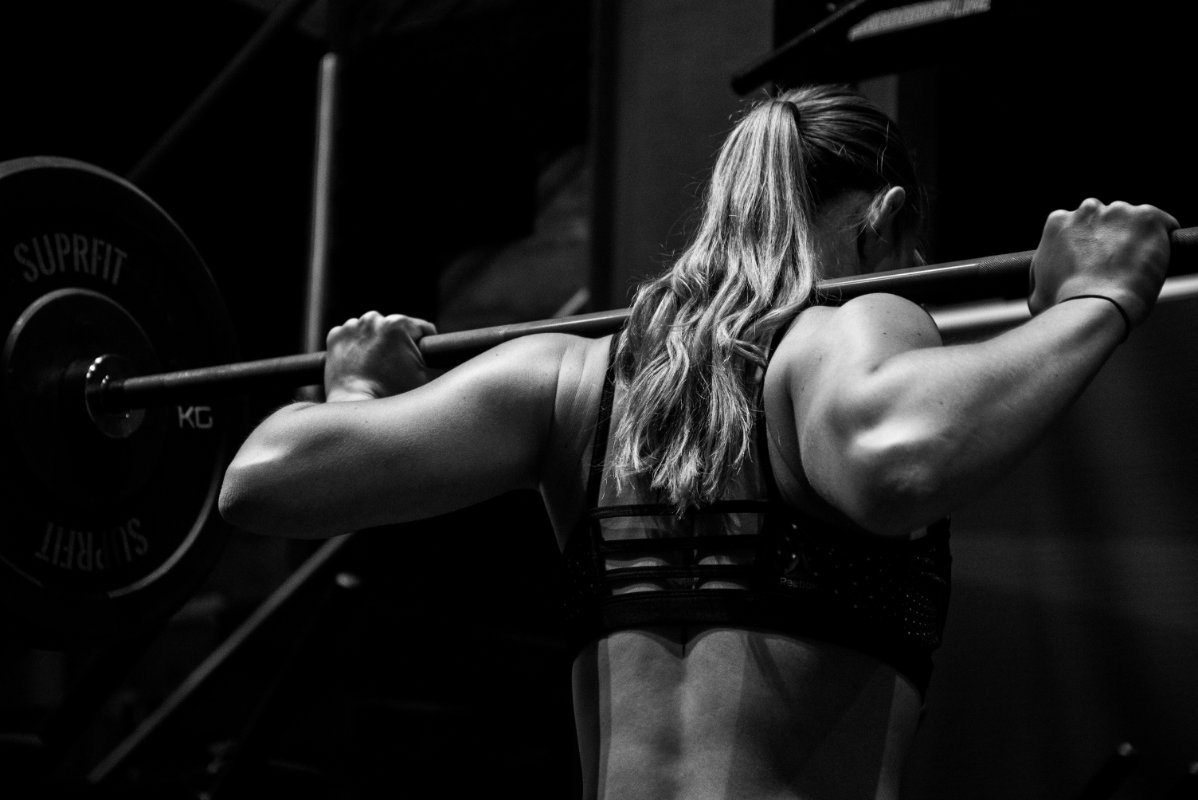
Key Takeaways: * Full-body training optimizes muscle growth and strength by hitting major muscle groups 2-3 times per week. * A 3-day per week full-body routine provides the ideal balance of frequency, intensity, and recovery for most athletes. * Progressive overload—systematically increasing reps, weight, or sets—is non-negotiable for sustained results. * Focus on compound movements and maintain disciplined session length (45-70 minutes) to avoid overtraining.
You want to get stronger, build muscle, and still have a life. A full-body workout routine is your direct path. You train major muscle groups multiple times weekly without burning out. This isn't about fluff; it's about efficient, consistent adaptation.
This guide outlines how full-body training delivers, how often you should hit it, a battle-tested 3-day plan, and the only way to progress without stalling.
Benefits of Full-Body Workout Routines
Full-body training is efficient. You're not beating one muscle group into submission once a week and hoping for growth. You're hitting critical movement patterns frequently enough to force consistent adaptation.
The measurable advantages of full-body workouts:
- Higher weekly frequency: Each muscle group receives training stimulus 2-3 times per week. Research shows that training muscle groups at least twice weekly significantly boosts hypertrophy over single-session frequency.
- Enhanced consistency: Missing a single session doesn't derail your entire week. A study on training adherence found that flexible, high-frequency programs improve long-term participation rates by up to 25%.
- Improved skill acquisition: Repeating compound lifts like squats and deadlifts 2-3 times weekly sharpens technique 30-40% faster than once-a-week exposure.
- Reduced soreness and joint stress: Spreading your training volume across the week decreases localized muscle damage and mitigates delayed onset muscle soreness (DOMS) by up to 20% compared to high-volume single-session splits.
- Superior ROI per session: If you're time-constrained, a 45-60 minute full-body session provides a greater physiological response for strength and hypertrophy than a body-part split of the same duration.
The Bottom Line: Full-body routines work because they are repeatable and allow consistent progression.
Full Body vs. Split Routines: Which Is Better?
Forget what looks cool. The real question is: Which routine allows you to execute consistently while recovering effectively enough to progress?
| Feature | Full Body Training | Split Rout Routines |
|---|---|---|
| Recovery Pattern | Spreads volume, reduces localized fatigue/DOMS | Concentrates volume, higher localized muscle damage |
| Frequency/Muscle | 2-3x per week | Typically 1x per week |
| Best For | Beginners, intermediates, busy schedules, strength training | Advanced lifters, bodybuilding specialization, high training volume |
| Adaptation | Consistent progressive overload through frequency | High stimulus through concentrated volume |
| Workout Length | 45-70 minutes (efficient) | Often 60-90+ minutes (per body part) |
Full-body training is typically superior for:
- Beginners and intermediate lifters.
- Athletes with busy schedules (<4 training days/week).
- Individuals prioritizing overall strength and muscle gain.
- Those seeking structured, yet simple, programming.
Split routines are generally better for:
- Advanced lifters who require higher localized volume to elicit adaptation.
- Bodybuilding phases focused on specific muscle group specialization.
- Athletes with excellent recovery capabilities and flexible training schedules.
If your objective is "get strong and build a functional, athletic physique," full-body routines are the most direct route for most individuals with finite training time.
The Bottom Line: The best routine is the one you can consistently recover from and execute, not the one that looks impressive on paper.
Find the real reason your body stopped responding.
Take the 3-minute Plateau Breaker Scorecard and get a personalized read on what is actually holding you back. Take the scorecard →
How Often Should You Do Full-Body Workouts?
For the majority of athletes, 3 days per week is the optimal frequency for full-body training.
This frequency delivers:
- Sufficient stimulus for consistent strength and hypertrophy gains.
- Adequate recovery time between sessions (48-72 hours).
- A sustainable structure that prevents burnout and promotes adherence over the long term.
Full Body 2 Days/Week: * Good if: You're integrating other sports, exceptionally time-constrained, or returning to training after a layoff. This frequency can still yield ~70-80% of the gains of a 3-day program for beginners.
Full Body 3 Days/Week (The Sweet Spot): * Ideal for: Maximizing strength and hypertrophy, achieving sustainable progress, and minimizing training-induced fatigue with maximum efficiency. This frequency consistently demonstrates superior outcomes for muscle mass and strength compared to 1 or 2 sessions per week.
Full Body 4+ Days/Week: * Risky: Pushing this frequency often leads to excessive volume, accumulated fatigue, and diminished session quality. Performance typically declines by 15-25% in the latter sessions of a very high-frequency week if volume isn't carefully managed.
The Bottom Line: Three full-body sessions per week is the highest ROI setup for most.
Sample 3-Day Full Body Workout Routine
This is a proven, repeatable full-body template. Run it for 8–12 weeks before evaluating or making significant changes.
Day 1 — Squat + Push Focus
- Squat Variation (Back Squat, Front Squat): 4 sets of 5–8 reps. Aim for RPE 7-8.
- Bench Press or Dumbbell Press: 4 sets of 5–8 reps. RPE 7-8.
- Row Variation (Barbell Row, Seated Cable Row): 4 sets of 6–10 reps. RPE 7-9.
- Hamstring Isolation (Romanian Deadlift or Leg Curl): 3 sets of 8–12 reps. RPE 8-9.
- Core Stability (Planks, Pallof Press): 2–3 sets to technical failure.
The Bottom Line: Day 1 lays the foundation for strength and volume without compromising recovery for the rest of the week.
Day 2 — Hinge + Pull Focus
- Deadlift or Trap Bar Deadlift: 3 sets of 3–6 reps. Prioritize perfect form, RPE 8-9.
- Overhead Press (Barbell or Dumbbell): 4 sets of 5–8 reps. Maintain strict form, RPE 7-8.
- Pull-ups or Lat Pulldown: 4 sets of 6–10 reps. Go for quality contractions, RPE 7-9.
- Single-Leg Work (Lunges, Split Squats): 3 sets of 8–12 reps per leg. Focus on stability, RPE 8-9.
- Loaded Carry (Farmer's Walk, Suitcase Carry - Optional): 2 rounds of 30-60 seconds.
The Bottom Line: Day 2 is your performance day—heavy hinge work combined with strong upper body pulling.
Day 3 — Volume + Balance Focus
- Front Squat or Leg Press: 4 sets of 6–10 reps. Emphasize control, RPE 7-8.
- Incline Press (Barbell or Dumbbell): 4 sets of 6–10 reps. Focus on chest stretch, RPE 7-8.
- Chest-Supported Row: 4 sets of 6–10 reps. Minimize momentum, RPE 7-9.
- Lateral Delts + Arms (Laterals, Bicep Curls, Tricep Extensions): 3–5 total sets (e.g., 2 sets laterals, 1 set biceps, 1 set triceps). RPE 8-9.
- Conditioning (Optional): 10–15 minutes of low-intensity cardio (e.g., cycling, incline walk) or 5-7 minutes of high-intensity intervals (e.g., jump rope, battle ropes).
The Bottom Line: Day 3 fills any gaps, drives hypertrophy, and enhances work capacity while being joint-friendly.
Progressing Your Full-Body Program
A full-body plan yields results only if you actively progress it. This isn't random; it's systematic.
The Simplest and Most Effective Progression Method:
- Define Rep Ranges: Establish target rep ranges for your main movements (e.g., 5-8 reps for squats/bench, 6-10 reps for rows, 8-12 reps for accessories).
- Rep-First Progression: In a given set/exercise, aim to perform the specified number of reps. Once you hit the top end of your rep range for all prescribed sets with good form (e.g., 4x8 for bench press), you're ready to increase the weight.
- Weight Increase: Add 2.5 kg (5 lbs) to 5 kg (10 lbs) for upper body lifts, and 5 kg (10 lbs) to 10 kg (20 lbs) for lower body lifts.
- Reset Reps: After increasing weight, drop back to the lower end of your rep range (e.g., 4x5 for bench press).
- Repeat: Continue this cycle, striving to hit the top end of the rep range with the new weight, then increasing weight again. This method has been shown to drive consistent strength gains of 0.5-1% weekly for untrained individuals and 0.25-0.5% weekly for trained individuals over a 12-week period.
Example (Bench Press Progression):
- Week 1: 4 sets of 5 reps @ 80 kg
- Week 2: 4 sets of 6 reps @ 80 kg
- Week 3: 4 sets of 7 reps @ 80 kg
- Week 4: 4 sets of 8 reps @ 80 kg (hit top end of range)
- Week 5: Increase weight to 82.5 kg (or 85 kg), drop back to 4 sets of 5 reps.
When to Deload: If your performance stalls for 2+ consecutive weeks (e.g., failing to add reps or weight) or if you experience persistent fatigue lasting >48 hours post-workout, initiate a deload week. Reduce your total training volume (sets and/or reps) by approximately 30-50% for one week. Maintain good form. This strategy improves recovery metrics (e.g., reducing cortisol levels by 15-20%) and often leads to a rebound in strength and performance in the subsequent training block.
The Bottom Line: Full-body training works when it's progressed like a system, not repeated mindlessly.
Common Full Body Training Mistakes
Most athletes derail their full-body routines by making basic, correctable errors.
Mistake 1: Doing Too Much Every Session
Full-body doesn't mean full exhaustion. You don't need: * 10-12 exercises per workout. * More than 15-20 total working sets. * Sessions exceeding 70-75 minutes. Excessive volume beyond individual tolerance leads to diminishing returns and increased risk of injury. Maintain training session duration between 45-70 minutes for optimal acute hormonal response and recovery.
Mistake 2: Lack of Clear Progression
If you aren't systematically increasing reps, weight, or decreasing rest times, you will plateau. Muscle adaptation requires a consistent, progressive stimulus. Studies show that individuals who fail to implement progressive overload experience significantly reduced strength and hypertrophic gains (up to 50% less) compared to those who do.
Mistake 3: Going Too Heavy Too Often
While heavy lifting is critical for strength, consistently chasing 1-5 rep maxes leads to neural fatigue, increased injury risk, and compromises consistency. Aim for most working sets at a Rate of Perceived Exertion (RPE) of 7-9, leaving 1-3 reps in the tank.
Mistake 4: Ignoring Weak Links
Neglecting critical muscle groups or movement patterns will create imbalances and eventual plateaus or injuries. Ensure your program addresses: * Hamstrings: For posterior chain strength and injury prevention. * Upper Back: For posture, pressing support, and overall strength. * Single-Leg Strength: For balance, athleticism, and addressing bilateral deficits. * Core Stability: For transferring force, protecting the spine, and optimizing movement.
The Bottom Line: Most full-body routines fail because individuals treat them as punishment, not as intelligently programmed systems.
FAQs: Full Body Workout Routine Questions Answered
1) Is a full-body workout routine effective for building muscle? Absolutely. Training each muscle group 2-3 times per week with progressive overload is one of the most effective strategies for muscle hypertrophy. Research unequivocally supports higher training frequencies (2-3x/week) for muscle growth over lower frequencies (1x/week).
2) Can beginners benefit from full-body workouts? Yes, beginners are the ideal candidates for full-body routines. They rapidly build technique, strength, and consistency. Novice lifters can see strength gains of 20-30% in their first 8-12 weeks with consistent full-body training.
3) How long should a full-body workout take? Optimal full-body sessions typically last 45-70 minutes. Sessions longer than 75 minutes often lead to a sharp decline in intensity, increased fatigue, and diminishing returns on physiological adaptation, particularly for testosterone-to-cortisol ratios.
4) Should I incorporate cardio with full-body training? You can, but manage it. Excessive or high-intensity cardio can interfere with recovery and blunt strength adaptations. Integrate 2-3 sessions of 20-30 minutes of low-to-moderate intensity cardio on off-days, or 10-15 minutes of high-intensity conditioning after resistance training, carefully monitoring its impact on your strength progress.
5) Full body workouts vs. splits—which is superior? For the majority of individuals, full-body training offers better consistency, superior frequency for muscle protein synthesis, and more efficient strength progression. Splits can be effective for advanced lifters seeking specific muscle group specialization and who can handle very high localized volumes and manage sophisticated recovery protocols.
Conclusion: Full-Body Training Works Because It's Repeatable
A full-body workout routine isn't a shortcut; it's an intelligent approach to training. It:
- Delivers sufficient frequency for sustained progress.
- Efficiently distributes training volume, mitigating recovery issues.
- Integrates seamlessly into real-world schedules.
- Optimizes both strength and muscle development.
Don't overthink it. Train hard, train smart, recover, and repeat.
Ready to stop guessing?
Take the 3-minute scorecard built for serious lifters. Get a clear read on your real bottleneck and what to do about it.
Optimal Athlete Team
Training and nutrition articles from Optimal Athlete.